
Physiotherapy vacancies in Switzerland: how they work and when it makes sense to respond
Vacancies for physiotherapists in Switzerland are a starting point, not a final decision. They provide the broad outlines, but the real details and guidance become clear during the interview. Through PhysioMatch, you can look together at what suits you best and use vacancies to explore further in a targeted manner.

Physiotherapy vacancies in Switzerland
If you are interested in working as a physiotherapist in Switzerland, vacancies play an important role. Sometimes a position immediately appeals to you, sometimes a vacancy mainly raises questions. What does this text actually say? Does this fit my experience and wishes? And is responding logical at this moment, or mainly an initial exploratory step?
Those questions are very recognisable. Working in Switzerland is the beginning of a new phase for many physiotherapists, professionally and personally. Vacancies play an important role in that, but they often work slightly differently than many physiotherapists are used to.
A vacancy does not automatically mean that someone must start immediately. In practice there is often time between first interest and actual employment, because preparation and alignment usually play a fixed role.
This page helps you understand that well.
At a glance: what you learn on this page
- What a physiotherapy vacancy in Switzerland does and does not say
- How to use vacancies in a smart way
- Why responding often helps, even if you still have questions
- How to avoid staying in doubt based on text alone
- And most importantly: you do not have to figure this out on your own.
How physiotherapy vacancies via PhysioMatch are structured
Vacancies you see via PhysioMatch are intended as a first orientation. They show the main outlines of a role, a description of the environment and the help PhysioMatch can offer. This allows you to focus on aspects that are important to you and discuss them with PhysioMatch.
The emphasis is therefore on:
- the role
- the type of practice
- the number of hours
- the required background
What you will not see in detail are extensive descriptions of guidance, team dynamics or onboarding. These parts differ per person and are not fixed in advance, but aligned in conversation.
PhysioMatch knows the Swiss practice environment from the inside and understands which questions are usually discussed later. That is why vacancies are deliberately supplemented with context and explanation, so it becomes clear what a role can mean in daily practice and where there is room for alignment.
This way you do not have to analyse or interpret Swiss vacancies yourself, but you get a clear starting point to look further and ask questions.
What a vacancy does tell you
Despite their concise form, vacancies often provide clear indications. They usually show:
- what type of employer it is (practice, health centre, clinic)
- in which setting you work (primary care, multidisciplinary, specialised)
- what level of independence is expected
This helps to determine whether a vacancy broadly fits you. In practice these characteristics are used to assess together whether this is a logical option to explore further.
What a vacancy does not say, and why that is logical
What you usually do not literally see in a vacancy are precisely the things that make the difference in practice:
- what the guidance is really like
- how collaboration in the team feels
- how onboarding works
- and how quickly someone usually settles in
In Switzerland this information is often discussed only in a conversation, because it can strongly depend on the person and the situation. Employers regularly use vacancies mainly to gauge interest. The actual content often emerges only when it is clear who is sitting opposite them.
PhysioMatch brings this information forward earlier. Our team largely consists of physiotherapists who have made the move to Switzerland themselves. That is why we understand well which questions matter and what to pay attention to in conversations.
Experience from a physiotherapist
In Belgium I often worked late, sometimes until nine o clock in the evening. Here people find it strange if you work that long.
Lauren – physiotherapist in Zurich
Different types of physiotherapy practices in Switzerland
Although vacancies often use the same job title, daily practice differs per type of employer. Job titles in Switzerland are often kept broad, which means differences between practices are not always visible in the vacancy text.
Smaller, family-like practices
These are often teams of four to five physiotherapists. The atmosphere is personal and collegial. Guidance is generally available, but it is also expected that you take responsibility and show initiative.
This type of practice often suits physiotherapists who:
- value overview and short communication lines
- like working independently
- want to be part of a close-knit team
Looking together at which type of practice suits you prevents having to guess based on one vacancy.
Larger centres and multidisciplinary practices
In larger practices and centres there is often more structure and there are more opportunities to learn and collaborate with other disciplines. The atmosphere can be more formal, but it often offers a lot of professional depth.
Which work environment fits best only becomes truly clear when a vacancy is placed in context. In conversation it often becomes clear how the team functions, how guidance is organised and what expectations apply in daily practice.
Respond to vacancies, especially if you still have questions
A common thought is that you must first be sure whether something fits before you respond. At PhysioMatch it works differently.
Precisely when you still have questions:
- about the type of practice
- about the expectations
- or about the timing
responding is a logical step.
Responding does not mean you are committed to anything. It opens a conversation in which it becomes clear:
- what is really behind a vacancy
- what the work looks like in practice
- and whether this fits your situation
Doubt does not have to be a reason to wait. Often it is precisely a good moment to talk things through.
Example from practice
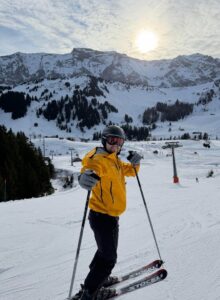
We thought about it for at least three to four years. In the end we spoke to many people and everyone said the obstacles are not that bad.
Bram and Laura – physiotherapists in Lucerne
When physiotherapists usually get in touch
Many physiotherapists contact PhysioMatch when they recognise one or more of these thoughts:
- This vacancy sounds interesting, but I do not know what is behind it
- I see multiple options and want to know what really suits me
- I want to respond, but not on a gamble
Vacancies as an entry point, not as an endpoint
Vacancies are often seen as a final decision: respond or not. At Physiomatch they work better as an entry point.
By viewing vacancies with the right context:
- you do not have to make assumptions
- overview is created across multiple possibilities
- it becomes clear what a vacancy can mean in practice
At PhysioMatch, guidance therefore does not start only after an application, but already at the stage of interest. Vacancies form the starting point of the conversation, not the conclusion.
That makes it easier to move forward without having to choose immediately, because you first get clarity about what is behind the text
How the process via PhysioMatch works
The route via PhysioMatch is clear and built in distinct steps, with suitability always central:
- You respond with interest in one or more vacancies, or you get in touch with a general question.
- A first conversation follows in which your background, experience, wishes and any doubts are discussed.
- Based on that, a personal profile is created that goes beyond just your CV.
- This profile is shared with practices that match in content and working environment.
- When there is interest, you receive clear information per practice about the role, the team and daily practice.
- If there is mutual interest, next steps are aligned, such as introductory conversations.
- It is often possible to visit multiple practices during one trip.
- For this trip, a travel cost reimbursement up to €300 is usually offered.
The vacancy overview is a logical starting point for many physiotherapists. For others, the route starts with a first conversation, without a direct focus on one specific vacancy. In both cases, the next steps are built up step by step, at a pace that fits your situation.

Common misconceptions about vacancies
A short vacancy means little guidance.
In Switzerland, guidance is often discussed in a conversation, because it depends on the practice and on your experience and needs.
If I respond, I have to decide immediately.
Responding opens a conversation in which it is first explored whether the role and work environment suit you. There is no obligation to make immediate choices.
I must first be sure about everything.
Certainty often arises precisely by asking questions and discussing possibilities, not by trying to get everything out of a text in advance.
Conclusion: vacancies are there to respond to and discuss
Physiotherapy vacancies in Switzerland are intended to provide direction, not to define all answers in advance. Those who use vacancies to explore possibilities gain more overview, less doubt and make better-informed choices.
The best way to use vacancies is therefore not to analyse them in isolation, but to view them in context and discuss them. That can start with a concrete vacancy, but just as well with a question or first interest in working in Switzerland.
Many physiotherapists start with the current PhysioMatch vacancy overview to see which practices and work environments appeal. Others first get in touch to discuss their questions and gain clarity. In both cases, the conversation is the moment when it becomes clear what a vacancy means in daily practice.
PhysioMatch supports physiotherapists in this step, with experience, overview and attention to what truly fits. Calm, professional and with care for your adventure.
Would you like a personal conversation?
Emigrating isn't something you do every day, thankfully. We understand there's a lot to consider. Register now and explore your options in Switzerland with us.